Tendon and Ligament Injuries: Understanding the Challenge for Better Therapeutic Outcomes
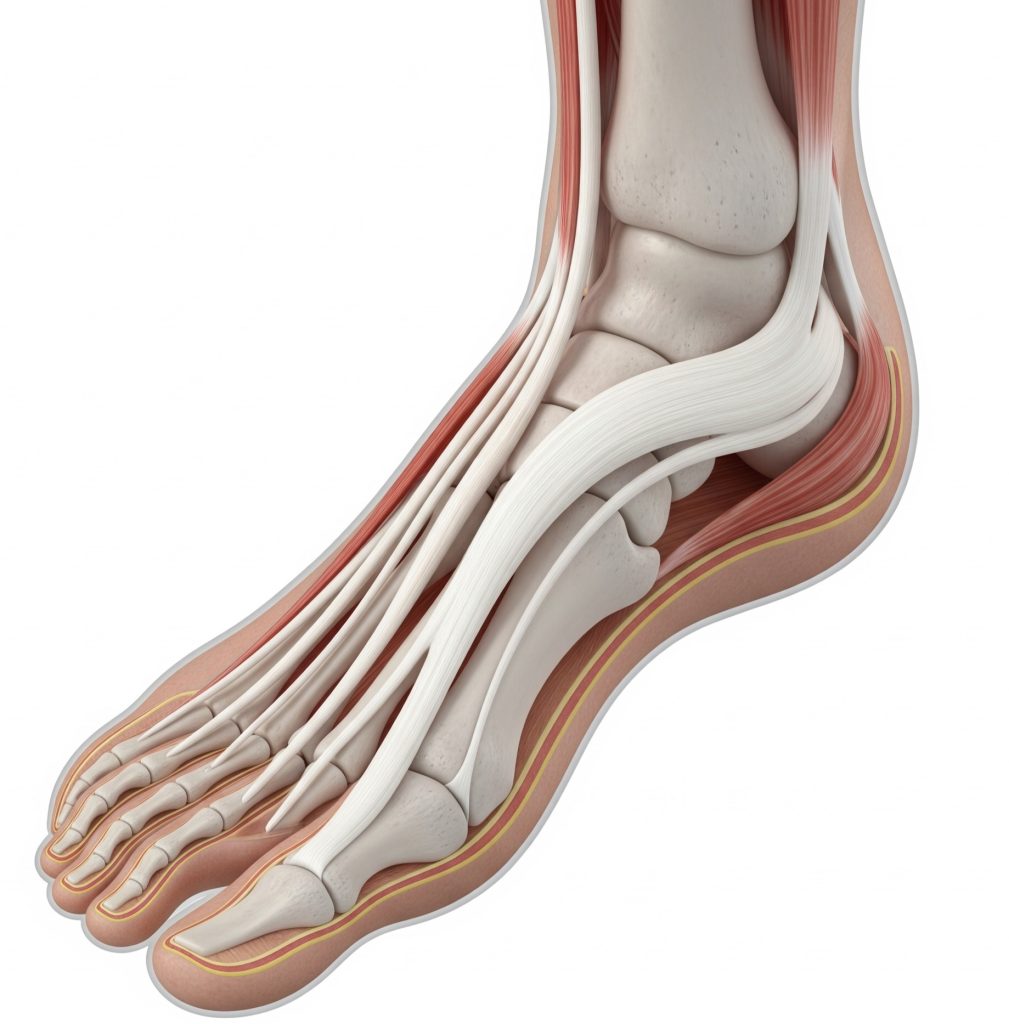
Tendon and ligament injuries are among the most common musculoskeletal problems you will encounter as a therapist. They occur across all ages, activity levels, and occupations, and can leave lasting or even permanent deficits in movement and quality of life.
Despite the impact, treatment options for tendon and ligament injuries have not advanced significantly in decades. Surgical repairs, such as for rotator cuff tears, can have failure rates as high as 39%, particularly for larger tears. Even when surgery is technically successful, patients often experience ongoing weakness, stiffness, or reduced endurance.
Conservative care also has limitations. For example, after completing a full exercise-based rehabilitation program for Achilles tendinopathy, up to 60% of patients still report symptoms. This means that many individuals are left with persistent pain, reduced function, and an increased risk of re-injury.
An article provided a more targeted approach to advance rehabilitation using load to improve tendon/ligament tissue.
Why We Haven’t Progressed Further
One reason treatments have stagnated is the complexity of tendon and ligament biology. These tissues are more than just “ropes” of collagen—they are living structures that respond to physical forces, chemical signals, and biological repair processes.
For tmany years, the main treatment for an acutely injured tendon has been immobilization. While short-term rest can be necessary to protect a healing tissue bridge, we now understand that controlled loading is essential for proper recovery. Unfortunately, current methods of applying load during rehabilitation still fail to consistently restore full, pre-injury strength and structure.
A major obstacle is that we still lack a clear, mechanistic understanding of how mechanical forces—tension, compression, and shear—regulate tendon and ligament healing at the cellular level.
The Diagnostic Challenge
In practice, tendinopathy is often defined simply as “pain in a tendon.” But the link between pain and structural damage is inconsistent. Imaging may show structural changes in some painful tendons, but in others, symptoms occur without visible structural damage.
Still, structural changes—both macro and microscopic—are common in injured tendons and ligaments. These tissues are designed to transmit tension effectively, so their material properties are critical. When the structure is disrupted, the tissue may heal by forming scar tissue, which is mechanically inferior and less organized than the native tissue.
The Clinical Goal: Regeneration, Not Just Repair
A key aim in managing tendon and ligament injury is to restore the tissue so that it functions like the original. This can be through natural regeneration or, in severe cases, by replacing it with a graft.
One promising avenue is to learn from the way tendons and ligaments develop in the first place. In healthy growth, these tissues undergo a sequence of carefully timed biological and mechanical processes, resulting in a highly organized, strong matrix.
In animals and certain developmental stages—such as neonatal tendons—regeneration is possible after injury. But in adults, tendons and ligaments rarely regenerate; instead, they form degenerative scar tissue. This suggests that adult tissues are missing key signals—mechanical, molecular, or both—that are present during development and early life.
If we can identify and reproduce those signals, we may be able to guide adult tendon healing toward regeneration rather than scarring. The same principles could also improve the engineering of tendon and ligament grafts.
Material Properties Reflect Mechanical Demands
Tendons and ligaments are not one-size-fits-all. Their structure and material properties—things like stiffness, elasticity, and collagen alignment—are shaped by the specific mechanical demands of their role in the body.
- Energy-storing tendons (e.g., Achilles) are built to stretch and recoil like springs. They have highly aligned collagen fibers, large fibril diameters, and a composition that allows them to temporarily store and release energy during running or jumping.
- Positional tendons (e.g., those in the fingers or forearm) prioritize precision and stability over elasticity, with stiffer properties and less capacity for recoil.
- Ligaments vary depending on their function—some resist rotational forces, others stabilize joints in a single plane.
For therapists, this means the loading program after injury should match the tendon or ligament’s “original job”. For example, an Achilles tendon repair will not regain full function if rehab focuses only on slow, heavy loads—it must also be trained for elastic energy return.
Specific Forces Drive Specific Molecular Programs
Mechanical loading is not just about restoring strength—it’s a biochemical signal. When tendons and ligaments are exposed to specific forces, their cells (tenocytes and ligament fibroblasts) respond by turning on or off certain genes.
Musculoskeletal loads can be generally categorized into tension, compression, and shear. Each of these regulate distinct molecular pathways that are involved in tissue remodeling.
- Tensile loading stimulates collagen type I production, increases fibril alignment, and activates enzymes that remodel the extracellular matrix.
- Compressive loading encourages production of cartilage-like molecules (proteoglycans) that can resist deformation, as seen where tendons wrap over bony pulleys.
- Shear forces influence lubrication and sliding between tissue layers, helping maintain gliding surfaces.
The implication is that different exercises trigger different molecular repair pathways. A program limited to isometric tension may build collagen strength, but without multidirectional forces, other crucial tissue adaptations may be missed.
Absent and Aberrant Forces in Degeneration
When tendons and ligaments are underloaded (absent forces) or loaded in a way that’s unnatural for them (aberrant forces), degeneration can occur.
- Absent loading, such as during prolonged immobilization or sedentary living, leads to collagen disorganization, reduced fibril size, and a loss of the crimp pattern that gives tendons their spring.
- Aberrant loading, such as repetitive strain in awkward angles or forces outside the tissue’s normal range, can cause microdamage and trigger a shift toward type III collagen—a weaker, scar-associated form.
This is why athletes can develop overuse tendinopathies and office workers can experience chronic ligament laxity—the loading pattern is wrong, even if total force is not excessive.
Stress Shielding in Tendons and Ligaments
“Stress shielding” happens when part of a tendon or ligament is spared from normal load, often due to surgical fixation, bracing, or compensatory movement patterns.
- The shielded region stops receiving mechanical signals, leading to localized weakening.
- Meanwhile, adjacent regions may be overloaded, creating a mismatch in tissue quality that predisposes to re-injury.
Clinically, this is seen in partial tendon repairs where sutures carry most of the load early on—sections of the tendon may remain under-stimulated and fail to remodel properly. Therapists can reduce stress shielding by progressively reintroducing load to all regions of the tissue through controlled range-of-motion and gradual strengthening.
Physical Loading for Clinical Therapies and Tissue Engineering
Mechanical stimulation is emerging as a cornerstone not just in rehab, but in tissue engineering. In laboratory settings, scientists use bioreactors that apply tension, compression, or shear to engineered tendon and ligament constructs. Without these forces, the tissue fails to develop the organization, collagen alignment, and strength seen in natural tissues.
In the clinic, this principle translates to rehabilitation as a form of guided tissue engineering inside the patient’s body:
- Early stage: Low-load isometrics to protect healing fibers while providing minimal stimulus.
- Mid stage: Progressive isotonic loading in the tissue’s primary direction of stress to stimulate collagen type I production and fiber alignment.
- Late stage: Introduction of sport- or work-specific multidirectional loads to complete functional adaptation.
Just as in the lab, the type, magnitude, and timing of force determine whether the repaired tissue ends up scarred, weak, or truly regenerated.
Implications for Therapy and Rehabilitation
For therapists, this knowledge reframes the role of rehabilitation. Rather than simply “strengthening” the injured area, the goal is to create a loading environment that stimulates the right cellular responses.
- Too little load can result in a weak, disorganized scar that never matures.
- Too much load can disrupt early healing and cause further injury.
- The right load at the right time can stimulate the molecular pathways that guide healthy tissue development and remodeling.
Different tendons and ligaments have different roles—some store and release energy (like the Achilles tendon), while others position joints for fine control (like the tibialis anterior tendon). This means the ideal rehabilitation loads and progressions may differ based on the tissue’s function and the forces it normally experiences.
Key Takeaways for Clinical Practice
- Understand the injury beyond the pain – Imaging and structural assessment can help identify whether you’re dealing with an acute injury, chronic degeneration, or a mix.
- Respect the biology of healing – Early stages may require protection, but prolonged immobilization risks producing inferior scar tissue.
- Use load as medicine – Apply progressive, controlled mechanical loading tailored to the tissue type and stage of healing.
- Look to development for guidance – Regeneration research shows that tissues respond differently at different stages; therapy should reflect that timing.
- Think about long-term tissue quality – The aim is not just symptom resolution but restoration of strength, structure, and resilience.
In summary:
Tendon and ligament injuries are not just mechanical problems—they are biological challenges that require a deep understanding of how these tissues develop, adapt, and repair. As therapists, we have the opportunity to bridge the gap between basic science and patient outcomes, using our interventions to guide healing toward regeneration and away from scarring. By combining careful load management with insights from developmental biology, we can improve both recovery times and long-term function for our patients.
Regular exercise prevents the development of chronic pain
Manual activities may improve brain health
Acute Effects of Myofascial Stretching on Multiple Sclerosis Patients
About The Author
