Long-Duration Stretching for Strength, ROM and Muscle Adaptation
For decades, stretching has been associated primarily with flexibility gains. However, emerging research shows that long-duration, high-intensity stretching can also induce structural and functional changes in muscle—potentially influencing strength, hypertrophy, and even contralateral performance. These findings are clinically relevant for therapists working in rehabilitation, mobility restoration, athletic preparation, and return-to-function programs.
Stretching and ROM: Well-Established Benefits
Regular stretching improves range of motion (ROM) through both mechanical and sensory pathways. Human studies consistently show that multi-week stretching programs enhance joint flexibility (Young et al., 2013; Medeiros et al., 2016). Two main mechanisms are understood:
- Sensory adaptation (tolerance to stretch): reduced pain perception and improved stretch tolerance (Freitas et al., 2018).
- Structural change (sarcomeres in series): animal studies demonstrate longitudinal muscle fiber growth and serial sarcomere addition after intensive stretching (Williams et al., 1988; Alway, 1994), and early evidence suggests this may occur in humans as well (Damas et al., 2018).
To optimise ROM outcomes, the literature points to:
- longer stretching durations,
- higher frequencies, and
- sufficient intensity (Thomas et al., 2018; Apostolopoulos et al., 2015).
Low-intensity stretch loads appear to be absorbed mostly by elastic tissues, while contractile adaptation requires stronger mechanical tension.
Beyond Flexibility: Strength and Hypertrophy Potential
Animal models provide striking results: long-duration stretching (from 30 minutes to continuous 24-hour protocols) can increase muscle size by more than 100% and strength by up to 95% (Antonio & Gonyea, 1993; Alway, 1994). These adaptations include both longitudinal hypertrophy (more sarcomeres in series) and increases in muscle cross-sectional area.
Human studies are more mixed, but a growing number demonstrate:
- increases in maximal strength up to ~30%, and
- measurable hypertrophy over multi-week interventions,
particularly when stretching volume is high (Kokkonen et al., 2007; Mizuno, 2019; Panidi et al., 2021; Simpson et al., 2017). Other trials show no change, which is likely due to shorter duration, lower intensity, or inconsistent dose.
Intensity and Dose Matter
Evidence suggests that meaningful muscular adaptation from stretching occurs only when:
- total stretch time per muscle is high (≥ 30–60 min per session),
- frequency is ≥ 5–7 days/week, and
- the stretch is performed at a strong but tolerable intensity (around 8/10 discomfort).
This aligns with the principle of mechanotransduction: prolonged tension can activate pathways linked to muscle remodeling and hypertrophy, much like resistance training.
Cross-Education Effects
Interestingly, several studies report strength gains in the non-stretched limb, a phenomenon well known in unilateral strength training and attributed to neural adaptations. This suggests that long-duration stretching may influence the central nervous system, not only local tissue properties.
Clinical Implications for Therapists
Long-duration stretching may have valuable applications in:
| Clinical Goal | Potential Benefit of Long-Duration Stretching |
|---|---|
| ROM restoration | Proven improvements in flexibility and joint mobility |
| Injury rehabilitation | Option when active loading is not yet possible (e.g., post-surgery, immobilization) |
| Muscle maintenance | May help reduce atrophy during reduced-load phases |
| Strength enhancement | Possible gains without traditional resistance training |
| Contralateral support | Useful when one limb cannot be actively trained |
This is particularly relevant for tendinopathies, post-cast immobilization, joint replacement rehab, stiff ankle/knee/hip presentations, and athletic return-to-play programs.
Key Takeaways for Practice
- Stretching is not just a flexibility tool—under the right conditions, it can drive strength and structural adaptations.
- Dose is the differentiator: brief static holds (20–60 seconds) improve ROM but will not hypertrophy muscle; long-duration loaded stretching (≥1 hour total per muscle per session) may.
- Neural and structural pathways are both involved, making stretching a potentially powerful adjunct for rehabilitation and performance.

Josephine Key talks about Freedom to Move
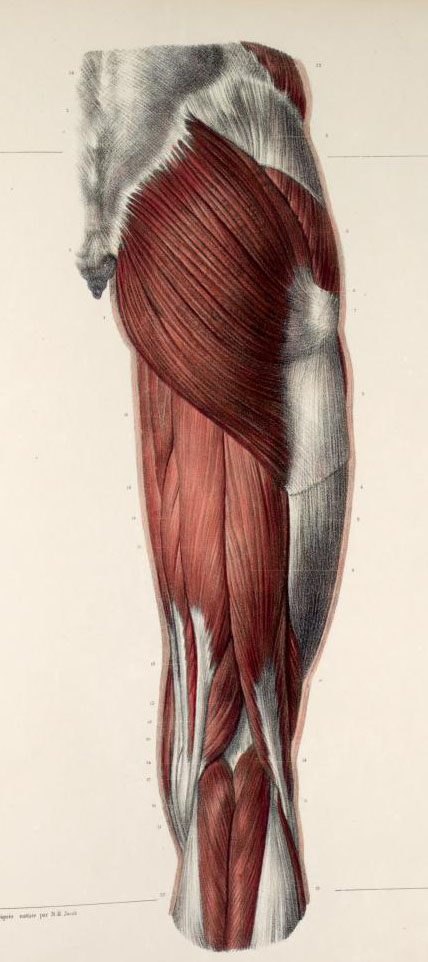
The anatomical and functional relation between gluteus maximus and fascia lata

Physiotherapy works better when you believe it will help you
About The Author
