Beyond the Shoulder: What Therapists Need to Know About Frozen Shoulder
Frozen shoulder is often treated as if it is only a stiff and painful shoulder joint. But the newer view is much broader. For therapists, the key message is that frozen shoulder is not just a local mechanical problem. It is a whole-person condition in which inflammation, fibrosis, pain processing, metabolism, sleep, stress, and psychological burden all interact. This helps explain why some patients do not recover fully, why progress can be slow, and why a shoulder-only treatment approach often feels incomplete.
Clinically, frozen shoulder presents with a gradual onset of deep, dull, often severe pain, together with a marked loss of both active and passive movement. External rotation is usually the most limited motion, especially with the arm by the side. Sleep disturbance is common, and many patients describe constant pain that affects not only the shoulder but also the upper arm, scapular region, chest, or neck. In later stages, movement becomes more limited, compensation increases, and the shoulder girdle may become weak from disuse.
A review study evaluated the latest research to better understand what causes this conditionand the best ways to diagnose and treat it.
The traditional label “adhesive capsulitis” is now considered misleading. There are no true adhesions in the way the term suggests. Instead, research points to an early inflammatory phase followed by capsular fibrosis. The capsule becomes thickened, more vascular, more innervated, and progressively stiffer. Fibroblasts shift toward myofibroblasts, collagen structure changes, and the tissue becomes less adaptable. In practice, this means the problem is not simply “tight tissue” that can be forced to release.
One of the most useful updates for therapists is the growing recognition that frozen shoulder is linked with systemic health. Diabetes, pre-diabetes, thyroid disorders, altered lipid metabolism, higher body mass index, smoking, and other comorbidities are all more common in this population. Low-grade systemic inflammation appears to be an important background factor. Advanced glycation end-products, especially relevant in people with diabetes and sedentary lifestyles, may stiffen collagen and make the condition more persistent. This helps explain why some cases are more severe, longer lasting, and less responsive to standard care.
Pain in frozen shoulder also needs a more modern interpretation. Early in the condition, pain is likely driven mainly by peripheral inflammation and sensitization in the capsule. But in some patients, the nervous system seems to become more involved over time. The research does not show that central sensitization dominates in all cases, but it does suggest meaningful subgroups. Some patients show more pain sensitivity, greater distress, worse sleep, and slower recovery. For therapists, this means pain intensity is not always a direct reflection of tissue status. In some cases, the nervous system, beliefs, and stress load may be amplifying the clinical picture.
The psychological impact of frozen shoulder is substantial and should not be treated as secondary. Patients often report helplessness, sadness, frustration, fear, catastrophizing, and a sense that others do not understand how disabling the condition is. Many struggle with household roles, work, recreation, and sleep. Some feel invisible because the condition is painful and disabling but not outwardly obvious. This matters because mood, fear, poor social support, and negative beliefs are associated with worse pain, disability, and recovery trajectories. Therapists should not see these as separate from physical care. They are part of the condition.
Diagnosis remains mainly clinical. No single gold-standard test exists. The most useful pattern is insidious onset, night pain, and progressive loss of both active and passive range, especially external rotation. Imaging can help rule out other causes such as rotator cuff tear, fracture, osteoarthritis, dislocation, or tumor, but it does not replace clinical reasoning. Ultrasound and MRI may show features that support the diagnosis, such as thickening of the coracohumeral ligament or inferior capsule, but these findings are not definitive on their own. For therapists, the practical point is to rely on careful history, movement assessment, irritability, and recognition of the typical pattern.
Treatment should be individualized rather than protocol-driven. The stage of irritability matters more than rigid stage labels. When irritability is high, the main goals are pain reduction, comfort, reassurance, sleep support, and maintaining tolerable movement. Aggressive stretching or heavy manual therapy in this phase may worsen symptoms and possibly reinforce the inflammatory-fibrotic cycle. When irritability is lower, treatment can become more active, with gradual loading, stretching, range restoration, and function-focused exercise.
Education is central. Patients need to understand that frozen shoulder can be prolonged, that recovery is often slow but meaningful, and that treatment should match their symptom irritability and personal goals. Clear education can reduce fear, improve adherence, and help patients stop interpreting every pain flare as harm. It is also helpful to explain that pain may be influenced by sleep, stress, mood, metabolic health, and general inflammation, not only by the shoulder tissues themselves.
Exercise therapy remains a foundation of care. No one exercise approach has proved clearly superior, so the best program is the one that matches the patient’s limitations, goals, and irritability level. Exercises should be practical, easy to perform, and aimed at the movements that matter most to the patient. Active and active-assisted movements are often useful, with attention to avoiding excessive compensation. The ideal dose is enough to create useful mechanical input without provoking a lasting flare. In frozen shoulder, pushing harder is not always better.
Manual therapy has a role, but mostly as an adjunct. It may help reduce pain, improve patient confidence, and support the therapeutic alliance. Its mechanical effect on the capsule is likely limited, so it should not be presented as “breaking adhesions” or structurally releasing the shoulder. Gentle mobilization and stretching may be helpful, particularly later when irritability is lower, but should be used thoughtfully and in combination with exercise and education.
Medication and injection options may also fit into multidisciplinary care. Intra-articular corticosteroid injection appears to offer the strongest short-term pain relief, especially in earlier, more inflammatory phases. Evidence suggests that physiotherapy combined with injection can be as effective as more invasive procedures at one year, with less risk. This supports a conservative-first pathway in most cases. More invasive options such as manipulation under anaesthesia or arthroscopic release are generally reserved for more resistant cases after adequate nonoperative management.
A particularly valuable message for therapists is that lifestyle factors deserve more attention. Sleep disturbance, stress, inactivity, poor metabolic health, and possibly diet quality may all contribute to symptom persistence. While therapists are not expected to manage every systemic issue directly, they can screen, educate, and refer. Encouraging movement, sleep hygiene, stress regulation, and appropriate medical review for diabetes, thyroid issues, or metabolic dysfunction may improve outcomes more than focusing narrowly on range of motion alone.
In day-to-day practice, frozen shoulder is best managed with a biopsychosocial lens. That means assessing more than motion loss. It means asking about sleep, fear, work demands, mood, social support, metabolic health, and recovery expectations. It means recognizing that two patients with similar range restriction may need different care because their pain mechanisms, irritability, and psychosocial burden are different. Good frozen shoulder management is less about applying one superior technique and more about matching the intervention to the person in front of you.
The take-home point is simple: frozen shoulder is not just a frozen joint. It is a complex condition involving local tissue change, systemic inflammation, metabolic influences, altered pain processing, and major effects on quality of life. For therapists, the most effective approach is likely to be individualized, stage-sensitive, and person-centered. Treat the shoulder, but do not stop there. Treat the person living with it.
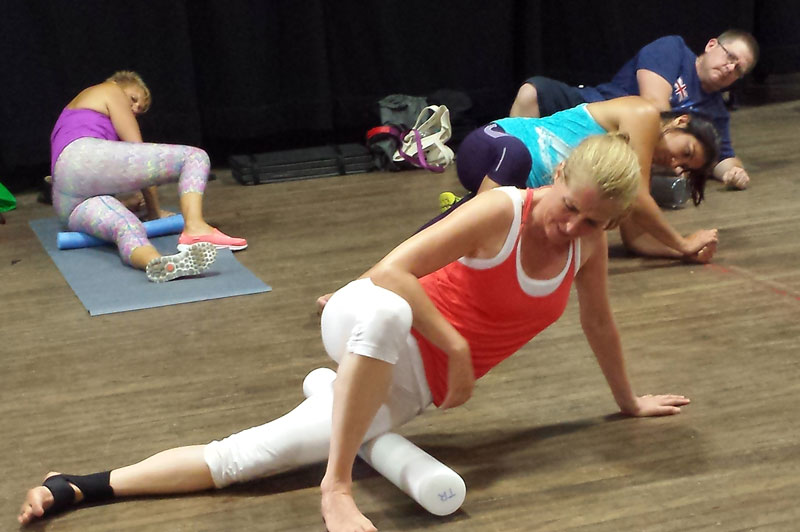
Foam Roller work can change the pressure pain threshold of the Ipsilateral and Contralateral Muscle Groups
Early versus delayed lengthening exercises for acute hamstring injury in male athletes

The structural continuity between the Achilles tendon and the plantar fascia
About The Author
