Massage, Pain, and the Nervous System
Massage therapy is widely used in sports medicine, rehabilitation, and pain management. Clinically, therapists often observe that massage can reduce pain, ease muscle tension, improve comfort, and help people move more freely. This study provides a possible biological explanation for how massage may reduce inflammatory muscle pain.
The key message is simple:
Massage does not just “loosen tight muscles.” It may also change how the nervous system processes pain.
What Was the Study About?
The researchers from China used a mouse model of inflammatory muscle pain. They injected an inflammatory substance into the tibialis anterior muscle to create muscle inflammation and pain sensitivity.
After this, one group of mice received daily massage for 14 days at two commonly used points: Zusanli (ST36) and Yanglingquan (GB34). The researchers then measured whether the mice became less sensitive to pressure and heat.
They also examined nerve tissues called dorsal root ganglia. These are important relay stations where sensory information from the body enters the nervous system.
What Did Massage Do?
The mice with inflammatory muscle pain became more sensitive to pressure and heat. This means their pain threshold dropped.
After daily massage, their pain thresholds gradually improved or, the mice became less sensitive to painful pressure and heat.
This suggests that repeated massage had a pain-reducing effect in this inflammatory pain model.
How Might Massage Reduce Pain?
The study focused on three important biological players:
CB1 receptors, which are part of the body’s endocannabinoid system.
Epac1, a molecule involved in inflammatory pain signalling.
Piezo2, a mechanosensitive ion channel that helps nerves detect touch, pressure, and mechanical irritation.
The researchers found that massage increased CB1 receptor expression and reduced Epac1 and Piezo2 expression in sensory nerve tissue.
Why Is CB1 Important?
CB1 receptors are part of the body’s natural pain-modulating system. They are activated by endocannabinoids, which are chemicals naturally produced by the body.
When CB1 activity increases, pain signals can be dampened. This may reduce the release of excitatory neurotransmitters and make sensory nerves less reactive.
In simple terms:
Massage may help activate the body’s own pain-calming system.
Why Are Epac1 and Piezo2 Important?
Epac1 and Piezo2 are involved in mechanical pain sensitivity.
When tissue is inflamed, nerves can become overly sensitive. Normal pressure or movement may then feel painful. This is called mechanical hypersensitivity or mechanical allodynia.
Piezo2 is especially important because it helps convert mechanical force into nerve signals. If Piezo2 activity is high, the nervous system may become more responsive to pressure and touch.
The study found that massage reduced Epac1 and Piezo2 levels in sensory nerves.
Simply Massage may reduce the “volume” of pressure-sensitive pain pathways.
A Better Way to Explain Massage to Patients
Instead of saying:
“Massage breaks down knots”
or
“Massage releases trapped pain,”
a more accurate explanation may be:
“Massage gives your nervous system safe mechanical input. Over time, this may help calm pain-sensitive pathways and teach your body that pressure and movement are safe again.”
This explanation is more consistent with modern pain science.
Clinical Caution
This was an animal study, not a human clinical trial. The results are promising, but they should not be overinterpreted.
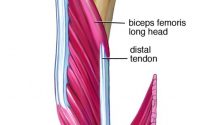
The role of intramuscular tendon in strenuous hamstring and quadriceps muscle strains

The Movement Kaleidoscope

Increase in lactate without change in nutritive blood flow at active trigger points following massage
About The Author
