Manual Therapy and Exercise for Low Back Pain: What Does the Evidence Mean for Therapists?
Low back pain (LBP) remains one of the most common conditions seen in clinical practice, and current guidelines such as National Institute for Health and Care Excellence (NICE) recommend exercise therapy as first-line treatment. However, the role of manual therapy—such as spinal manipulation, massage, or myofascial techniques—remains debated. A recent systematic review of randomized controlled trials (RCTs) helps clarify whether adding manual therapy to exercise provides meaningful benefits for patients with non-specific LBP.
Exercise as the Foundation of Care
Across clinical practice, there is no single standardized exercise prescription for LBP. Instead, therapists commonly prescribe a mix of strengthening, stretching, and motor control exercises, particularly targeting the core and lower body. These approaches aim to improve function, reduce pain, and enhance movement control.
Given this foundation, the key clinical question becomes: Does adding manual therapy improve outcomes beyond exercise alone?
What the Review Looked At
This systematic review followed PRISMA guidelines and included 10 RCTs (2000–2022) comparing:
-
Exercise therapy alone
vs. - Exercise therapy plus manual therapy
Outcomes included pain, disability, and function, measured using validated scales such as the Oswestry Disability Index (ODI) and Visual Analogue Scale (VAS). The included studies showed generally good methodological quality, with most incorporating blinding and standardized assessments.
Key Findings: A Consistent but Nuanced Benefit
The overall finding is clinically relevant:
👉 Manual therapy added to exercise improved at least one outcome (pain, function, or disability) in most studies.
However, the magnitude and consistency of benefit varied depending on the type of manual therapy used.
1. Spinal Manipulation: Mixed Evidence
Spinal manipulation showed inconsistent results:
- Some studies reported reduced pain and disability
- Others found no additional benefit over exercise alone
This variability may reflect differences in:
- Technique (thoracic vs lumbar manipulation)
- Patient subgroups
- Treatment dosage
For therapists, this suggests spinal manipulation may be useful in selected patients, but not universally necessary.
2. Myofascial Release: Efficiency and Mobility
Myofascial release (MFR) demonstrated:
- Reduced pain and disability in some studies
- Improved spinal mobility and endurance in others
Interestingly, benefits were not always consistent across populations, particularly in older adults, where structural changes (e.g., degeneration, sarcopenia) may limit responsiveness.
Clinically, MFR may be most effective in patients with myofascial restriction or stiffness, rather than all LBP presentations.
3. Massage Therapy: Short-Term Gains
Massage combined with exercise showed:
- Improved pain and disability
- Additional benefits in flexibility and symptom relief (e.g., paraesthesia)
Mechanistically, massage may:
- Modulate pain via neural pathways (gate control)
- Improve circulation and tissue recovery
However, evidence is largely short-term, and long-term benefits remain unclear.
4. Muscle Energy Techniques (MET): Promising but Underdeveloped
MET combined with exercise improved:
- Pain
- Range of motion
- Functional outcomes
Yet, effects on disability were inconsistent, and broader evidence remains limited. Despite this, some well-designed studies suggest MET may have sustained benefits, warranting further research.
5. Soft Tissue Mobilisation and Reflex Therapy
These approaches showed:
- Greater pain reduction than exercise alone
- No clear additional benefits for function or strength
Mechanisms likely involve neurophysiological modulation and therapeutic touch, though evidence is still emerging.
Clinical Interpretation for Therapists
The key takeaway is not that manual therapy replaces exercise—but that it may enhance outcomes when used appropriately.
Practical implications:
- Exercise remains the core intervention for LBP
-
Manual therapy can be used as an adjunct, particularly for:
- Pain modulation
- Improving movement tolerance
- Facilitating engagement in exercise
However:
- Effects are often modest and variable
- Benefits may be patient-specific, not universal
- Long-term superiority over exercise alone is uncertain
A More Integrated View
This review reinforces a shift in thinking: LBP management is not about choosing between exercise or manual therapy, but understanding how and when to combine them.
Manual therapy may:
- Reduce pain enough to enable better movement
- Improve tissue compliance and load distribution
- Support motor control retraining
For therapists, the challenge is clinical reasoning—matching the right intervention to the right patient.
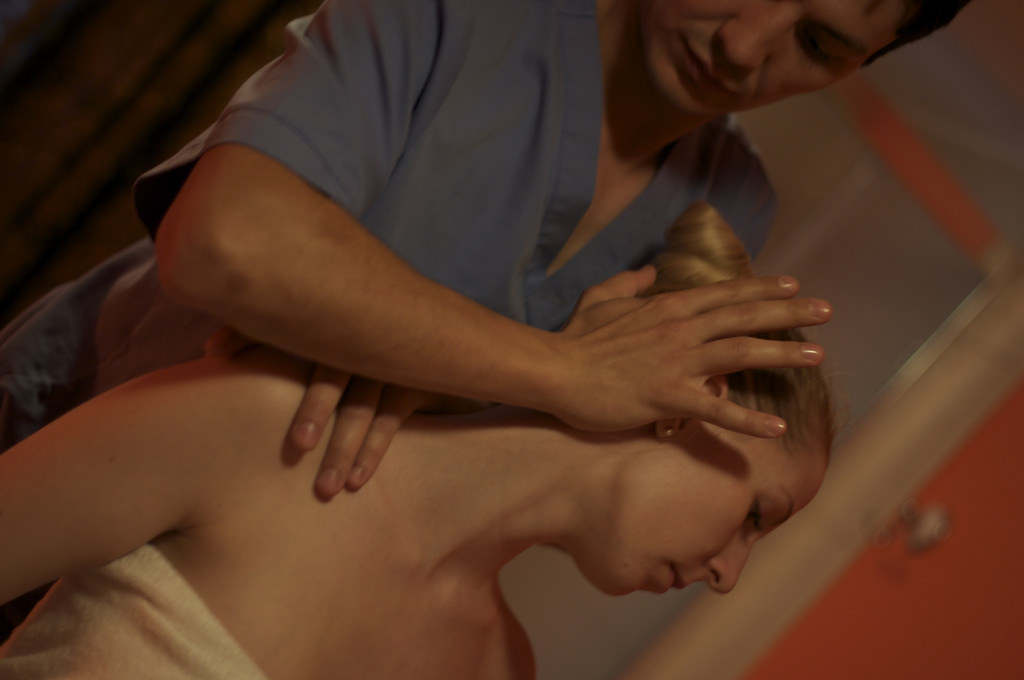
Myofascial Release or Myofascial Induction?
Unlocking the Brain’s Predictive Power in Bodywork

Synthesizing the Strength of the Evidence of Complementary and Integrative Health Therapies for Pain
About The Author
